NLP-Driven AI Agents: How They Work in 2026
Breadcrumb
Why do NLP-driven AI agents matter now?
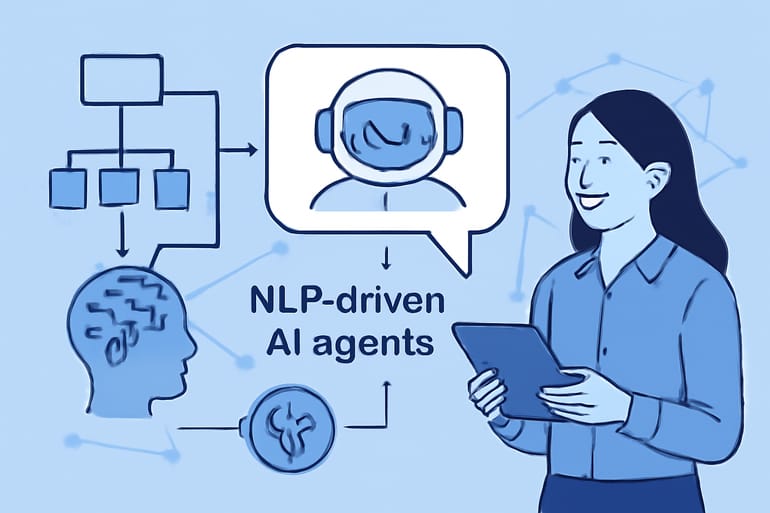
NLP-driven AI agents are software systems that can understand human language, interpret intent, and respond or act in a way that feels context-aware. Unlike simple scripted bots, they do more than match fixed keywords. They analyze the meaning of a message, identify what the user is trying to do, and connect that intent to a response, workflow, or decision.
That matters because businesses now expect automation to handle more complex conversations. A customer may ask a support question in plain language, a team member may request a report through chat, or a user may want a task completed without learning a rigid command structure. In each case, an NLP-driven agent helps reduce friction.
At a practical level, these agents sit between basic chat interfaces and broader intelligent automation. They are often used in customer support, internal knowledge search, ticket routing, and data processing tasks where language is the starting point. For developers, the appeal is flexibility. For business buyers, the appeal is lower handling time, better user experience, and clearer paths to scale.
You will also hear related terms such as conversational AI, virtual assistants, and chat bots. Those categories overlap, but not every chat bot is truly language-driven. That difference becomes important when comparing NLP-driven systems with rule-based agents, ML-powered agents, and more advanced automation stacks.
How do NLP-driven AI agents actually work?
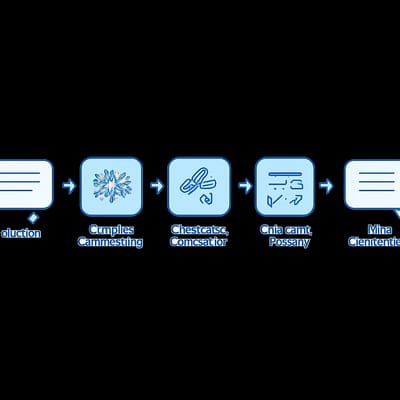
At a high level, an NLP-driven agent turns language into action through a sequence of steps. The exact architecture varies, but most systems include the same core building blocks.
1. Input processing
The agent receives text or speech and converts it into structured data. This may include tokenization, entity extraction, language detection, and normalization.
2. Intent recognition
The system determines what the user wants. For example, it may detect a refund request, a product question, or a request to summarize a file.
3. Context handling
Strong agents track conversation history, user role, prior actions, and business rules. This is what makes a follow-up question feel coherent instead of disconnected.
4. Decision and orchestration
Once intent is understood, the agent chooses what to do next. It may answer directly, call an API, retrieve information, create a ticket, or trigger a workflow.
5. Response generation
The final response is produced in natural language. In some systems this is template-based. In others, it is dynamically generated with stronger reasoning and variation.
A product manager might use this flow to support in-app guidance, while an IT professional may focus more on integration points, permissions, logging, and fallback paths. The same architecture can support external chat experiences and internal process automation, provided governance is built in from the start.
What makes NLP-driven agents different from rule-based and ML-powered systems?
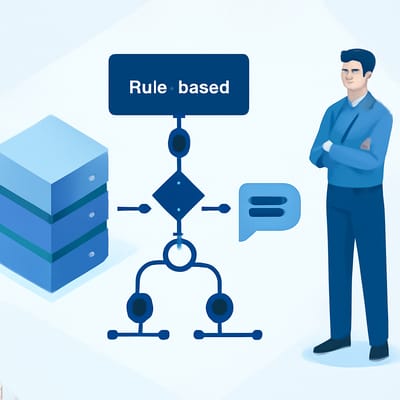
The biggest difference is how each system handles uncertainty, variation, and scale.
Rule-based agents
Rule-based agents follow predefined flows such as decision trees, button paths, or keyword triggers. They are predictable and easy to control, but they struggle when users phrase requests in unexpected ways.
NLP-driven agents
NLP-driven agents interpret language more flexibly. They can map different phrasings to the same intent, extract meaning from unstructured text, and support more natural conversations. That makes them a stronger fit for messy real-world inputs.
ML-powered agents
ML-powered agents is a broader category. Some include NLP, while others focus on recommendations, predictions, classification, or adaptive decision-making outside conversation. In practice, many modern agents combine NLP with machine learning models and retrieval systems.
For an SMB marketing team, the distinction affects campaign workflows. A rule-based bot may handle form routing well, while an NLP-driven agent can qualify inbound questions written in varied language and pass cleaner signals into a CRM. For enterprise-style environments, the trade-off often comes down to control versus adaptability.
Cost and risk also differ. Rule-based systems are usually cheaper to launch but harder to expand meaningfully. NLP-driven systems require better design, testing, and monitoring, yet they often produce stronger long-term value when user interactions are less predictable.
Where are NLP-driven AI agents most useful in business?
The best use cases share one trait: people communicate naturally, but the business still needs structured outcomes. That is where conversational AI automation becomes valuable.
Common use cases
- Customer support: answer FAQs, triage cases, summarize conversations, and route tickets.
- Data processing: extract entities from emails, classify documents, and transform text into workflow-ready records.
- Internal automation: help employees find policies, submit requests, or trigger routine actions through chat.
- Sales and intake: capture intent, qualify leads, and move conversations to the right team.
- Product experiences: guide onboarding, explain features, and reduce friction inside digital products.
In the UK market and similar regulated environments, use cases often succeed fastest when the scope is narrow and measurable. Support deflection, response-time reduction, and agent-assist tooling are common starting points because they show value quickly without forcing full process redesign.
Product managers often look for experience gains such as faster onboarding or fewer drop-offs. IT professionals care more about system reliability, security controls, and integration with existing stacks. Business buyers usually focus on ROI, service efficiency, and whether the agent improves outcomes without adding operational complexity.
Many teams begin with one focused workflow, then expand into adjacent tasks such as analytics, routing, and knowledge retrieval once the language layer proves reliable.
How should you evaluate NLP-driven AI agents before adoption?
Choosing an NLP-driven agent is rarely just a feature decision. You need to assess performance, governance, total cost, and fit with your operating model.
What to evaluate first
- Accuracy: Does the agent identify intent and entities correctly?
- Coverage: How well does it handle real phrasing variation?
- Fallback quality: What happens when confidence is low?
- Integration: Can it connect to your CRM, help desk, data tools, and APIs?
- Governance: Are permissions, audit trails, and data controls strong enough?
- Operational effort: Who trains, monitors, and improves the system?
Commercially, it helps to look beyond license cost. Include implementation time, maintenance workload, analytics needs, and escalation design. A low entry price can become expensive if the system creates more manual cleanup or weak handoffs.
If you are early in the decision cycle, a practical next step is to compare real use cases, request a product demo, and review case studies tied to support, automation, or document-heavy workflows. Teams that want a stronger internal business case often benefit from a whitepaper or structured evaluation checklist that maps performance metrics to costs and expected ROI.
The strongest adoption roadmaps start small. Define one measurable use case, test real language inputs, set success thresholds, and expand only after the agent proves reliable under live conditions.
What governance, cost, and ROI factors shape long-term success?
An NLP-driven agent can look impressive in a demo and still underperform in production if governance and economics are weak. Long-term success usually depends on three areas: control, measurement, and operational discipline.
Governance essentials
You need clear rules for data access, human escalation, retention, and model updates. This is especially important when agents touch support logs, internal documents, or customer records. Good governance protects accuracy and trust at the same time.
Cost drivers
Costs typically come from setup, integrations, testing, monitoring, and ongoing optimization. Usage-based pricing can also change the picture fast when interaction volumes grow. For that reason, cost planning should include both launch and steady-state operations.
ROI metrics that matter
- Reduced handling time
- Higher self-service resolution
- Faster document or email processing
- Lower ticket-routing errors
- Better user satisfaction
- More consistent internal workflows
For business buyers, ROI becomes easier to defend when the agent replaces repetitive work instead of adding another tool layer. For developers and IT teams, maintainability matters just as much as raw performance. A system that is easy to monitor and improve will usually outperform a more impressive but opaque setup over time.
As the category matures, more organizations are moving from basic chat experiments toward governed, workflow-connected agents. That shift makes evaluation discipline just as important as technical capability.
FAQ about NLP-driven AI agents
What is an NLP-driven AI agent?
An NLP-driven AI agent is a software system that understands human language and uses that understanding to answer questions, retrieve information, or trigger actions. It is designed to work with natural phrasing rather than only fixed commands.
How is an NLP-driven agent different from a chatbot?
A chatbot is a broad category, while an NLP-driven agent is a more specific type of system. Some chatbots are rule-based and follow scripts, but NLP-driven agents interpret intent, entities, and context more flexibly.
When should a business choose NLP-driven agents over rule-based systems?
Choose NLP-driven agents when users ask questions in varied language, when workflows depend on context, or when you expect the scope to expand over time. Rule-based systems still work well for simple, predictable flows with tight control needs.
How can SMB marketing teams use NLP-driven AI agents?
SMB marketing teams can use them to qualify inbound leads, answer campaign questions, route requests, and capture structured data from free-text messages. This is especially useful when prospects do not follow a fixed form path.
What should product managers look for in an NLP agent?
Product managers should focus on intent accuracy, user experience, fallback behavior, and how the agent supports onboarding or in-product guidance. It also helps to check whether analytics show where conversations succeed or break down.
What matters most for IT professionals during implementation?
IT professionals should prioritize integration options, identity controls, auditability, uptime expectations, and safe escalation paths. Strong logging and permission controls are essential when agents connect to business systems.
Are NLP-driven AI agents expensive to deploy?
Costs vary by scope, volume, and integration complexity. A narrow support or automation use case can be cost-effective, but broader deployments need budget for testing, monitoring, governance, and continuous improvement.
How do you measure ROI for NLP-driven AI agents?
Common ROI measures include reduced support workload, faster processing time, higher self-service resolution, and better consistency in routine tasks. The clearest results usually come from one defined workflow with baseline metrics before launch.