AI Types: Categories, Use Cases, and Guide 2026

Breadcrumb
What does “AI types” actually mean in business?
AI types can refer to several different ways of classifying artificial intelligence. Some teams group AI by technical method, such as rule-based systems, natural language processing, and machine learning. Others group it by business role, such as conversational tools, automation systems, analytics engines, or decision-support software. That is why the term can feel vague until you connect it to a practical use case.
For most businesses, the useful question is not which label sounds most advanced. It is which type of AI matches the job. A system built to answer customer questions has different design needs from one that classifies documents, routes support tickets, or predicts churn. Looking at AI through the lens of capability, control, and operational fit makes category decisions much clearer.
This category page gives you a broad overview of the landscape, with special attention to AI agents, chat-based systems, and automation use cases. Those topics matter because many companies are trying to move from basic scripted workflows toward more flexible systems that can interpret language, manage context, and support real business processes.
If you are comparing options for automation or conversational experiences, this overview will help you sort the major categories, understand where each type fits, and see how evaluation, governance, and ROI should shape your next step.
What are the main AI types businesses should know?
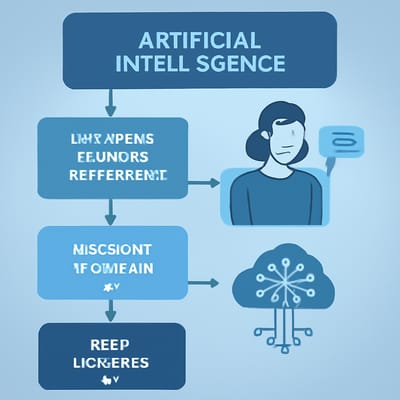
A clear taxonomy helps you avoid treating all AI systems as interchangeable. In practice, most business AI falls into a few broad categories.
Rule-based systems
Rule-based AI follows explicit instructions and predefined logic. It works well for narrow, predictable workflows where consistency matters more than flexibility.
NLP-driven systems
NLP-driven AI is designed to understand and process human language. It is commonly used in chat bots, virtual assistants, search, summarisation, and text-heavy workflows.
ML-powered systems
Machine learning systems identify patterns in data to classify, predict, rank, or optimize outcomes. They are often used in forecasting, fraud detection, recommendations, and operational analytics.
Conversational and agent-based systems
These systems combine language understanding, workflow orchestration, and decision-making. They are increasingly used for customer support, internal help desks, and business process automation.
Hybrid systems
Many modern deployments are hybrid. They combine rules, NLP, retrieval, and machine learning so the system can stay controlled while handling more variation.
For product managers, this framework helps map AI choices to customer journeys and product workflows. SMB marketing teams can use it to separate simple campaign automation from true conversational handling. IT professionals can use it to judge where governance, integration, and human oversight need to be strongest.
How do AI types differ in capability, control, and complexity?
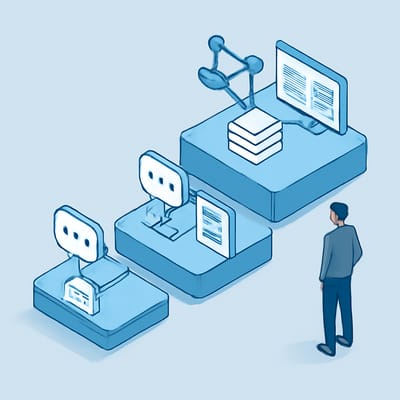
The real difference between AI types is not just what they are called. It is how they behave under real conditions.
Capability
Some AI types are designed for strict task execution, while others can interpret messy inputs and adapt to variation. Rule-based systems are narrow but stable. NLP-driven and agent-based systems are more flexible in conversation and text processing.
Control
The more predictable the workflow, the easier it is to control with rules. As soon as users speak in natural language or ask open-ended questions, you need systems that can handle ambiguity. That flexibility is useful, but it also raises the importance of guardrails and fallback logic.
Complexity
Complexity grows when AI needs access to multiple systems, sensitive data, or multi-step processes. A document classifier is usually simpler to govern than a customer-facing agent connected to billing, support, and account systems.
This trade-off matters when you are planning deployment. A product manager may choose a narrower AI type for onboarding guidance to reduce rollout risk. An SMB marketing team may prefer a hybrid setup that qualifies leads through natural language but still routes based on clear business rules. IT professionals often focus on the hidden complexity: permissions, observability, exception handling, and long-term maintenance.
Understanding these differences early helps businesses avoid overbuying, underestimating implementation effort, or expecting one AI category to solve every process challenge.
Where do AI agents fit within the wider AI types landscape?
AI agents sit inside the broader AI types category as systems designed to take action toward goals, not just return outputs. That usually means they can interpret requests, choose a next step, and interact with tools, knowledge sources, or workflows.
Within that group, there are important variants. Some agents are rule-based and highly constrained. Others are NLP-driven, making them better suited to natural language requests. Some are heavily ML-powered, using prediction and ranking to improve decisions. In many business settings, the most practical option is a hybrid design that balances flexibility with control.
This matters because the market often uses broad labels loosely. A simple scripted chat bot may be marketed as an agent, even if it cannot manage context or trigger meaningful actions. By contrast, a true business agent can support tasks such as triage, document processing, employee assistance, and workflow orchestration.
For developers and buyers, the key question is whether the system can do more than respond. Can it retrieve the right data, follow policy constraints, escalate when needed, and complete a useful action? That is what separates a promising demo from a reliable tool.
Deeper topics in this category include what NLP-driven AI agents are, how they work, and how they compare with rule-based systems. Those focused subjects are often the next step once you move beyond category-level understanding.
What should businesses evaluate before choosing an AI type?
Choosing the right AI type starts with the business problem, not the model category. The best evaluation process connects technical fit to operational outcomes.
Core evaluation criteria
- Use case fit: Does the AI type match the workflow and user behavior?
- Input complexity: Are you handling structured data, free text, or open conversation?
- System access: Will the AI need to trigger actions across business tools?
- Governance needs: How sensitive is the data and how strong must oversight be?
- Performance measurement: Can you define success with clear metrics?
- Cost profile: What will implementation, monitoring, and improvement actually require?
A narrow rule-based system can be the smartest choice when the process is stable and heavily controlled. An NLP-driven or agent-based approach makes more sense when users communicate in natural language and the system needs to interpret intent before acting.
For business buyers, cost and ROI should include setup effort, integration work, and operational maintenance, not just license fees. Product managers should test how the chosen AI type affects user experience and completion rates. IT professionals need to validate logging, auditability, and support burden before approving broader access.
Practical follow-up topics include evaluating performance metrics for AI agents, reviewing case studies, and building a short internal brief before requesting demos or vendor proposals.
How should UK businesses approach AI adoption across categories?
Adoption works best when businesses treat AI implementation as a staged decision process rather than a one-time platform choice. Different AI types create different demands around data, governance, and expected return.
A sensible adoption approach
- Start with one problem that has clear volume and measurable impact.
- Match the AI type to the task instead of forcing a broad solution.
- Pilot in a controlled environment with real inputs and fallback paths.
- Measure results against baseline service, efficiency, or quality metrics.
- Scale gradually only after governance and reliability are proven.
In UK business environments, trust and operational control are often as important as raw capability. Support automation, internal knowledge retrieval, and document-heavy workflows are common entry points because they are measurable and easier to supervise.
SMB marketing teams may begin with lead-routing or campaign response handling. Product managers often focus on onboarding, support deflection, or in-product assistance. IT professionals tend to prioritise internal help desk workflows, policy search, or request automation where monitoring and permissions can be tightly managed.
As adoption matures, companies usually move from isolated use cases toward broader AI portfolios. That is why category-level understanding matters. It helps you decide not only what to deploy first, but also what to expand into next with the right balance of capability, cost, and governance.
FAQ about AI types
What are the main types of AI used in business?
The main business categories usually include rule-based systems, NLP-driven systems, machine learning systems, conversational tools, and agent-based automation. Many real deployments combine several of these into hybrid systems.
How do AI agents differ from other AI types?
AI agents are designed to take goal-oriented actions, not just produce outputs. They often combine language understanding, decision logic, and workflow execution to complete useful tasks.
Which AI type is best for SMB marketing teams?
That depends on the job. Rule-based tools can handle simple routing and campaign automation, while NLP-driven or agent-based systems are better when leads and enquiries arrive in varied natural language.
What should product managers consider when selecting an AI type?
Product managers should look at user journey fit, implementation speed, fallback quality, analytics visibility, and how the AI affects conversion, onboarding, or support friction. The right category should support a measurable product outcome.
What matters most to IT professionals when evaluating AI categories?
IT professionals should assess integration methods, access controls, audit logging, monitoring, data boundaries, and maintenance requirements. A technically capable system still needs to be governable in production.
Are rule-based systems still useful compared with newer AI types?
Yes. Rule-based systems remain effective for predictable, highly controlled workflows where explainability and consistency matter more than flexibility. They are often a sensible starting point.
How should businesses measure ROI across different AI types?
Measure ROI through time saved, error reduction, faster processing, self-service success, and improved consistency. The exact metric set depends on the workflow and the AI type being used.
When should a business move from a simple AI system to an agent-based approach?
That usually makes sense when user inputs become less predictable, workflows require multiple system actions, or existing automation cannot handle context well. Expansion should follow clear evidence from a successful first use case.