How to Build a Chat Bot with NLP Pipelines Guide

Breadcrumb
What does it take to build a chat bot with NLP pipelines?
Building a chat bot with NLP pipelines starts with a simple idea: turn messy human language into structured actions your system can understand. In practice, that means designing a flow that takes user input, cleans it, identifies intent, extracts key entities, applies business logic, and generates a response. If you want the broader context first, what are NLP-driven AI agents and how they work explains why language-first agents are useful for conversational tasks.
A strong pipeline usually includes these stages:
- Input processing for spelling, punctuation, and token cleanup
- Intent detection to classify what the user wants
- Entity extraction to capture names, dates, products, or account details
- Dialogue management to track context across turns
- Response generation using templates, retrieval, or model-based replies
- Fallback handling when confidence is low
This matters because many chat bot failures are not model failures at all. They come from vague intents, poor training examples, weak handoff rules, or missing governance. A developer may focus on model accuracy, while a business buyer cares more about containment rate, response quality, and cost per conversation. Product managers often sit between those needs, balancing usability, support load, and rollout speed.
The goal is not to build the smartest possible bot. It is to build a reliable, measurable chatbot system that solves a narrow set of problems well, then expands safely.
How should you design the NLP pipeline step by step?

A practical NLP chatbot architecture begins with use cases, not tools. Start by listing the top conversation goals: answer FAQs, route leads, check order status, book appointments, or collect structured information. From there, map each goal to an intent and define the entities needed to complete it.
Core pipeline design
- Define intents with clear boundaries. "Track order" and "change order" should not be mixed.
- Create entity schemas for values such as product type, budget, location, or timeframe.
- Add preprocessing for normalization, language cleanup, and synonym handling.
- Train the classifier with realistic utterances, including short, messy, and ambiguous queries.
- Build dialogue rules for follow-up questions, confirmation, and memory.
- Connect business systems such as CRM, help desk, or product databases.
- Add fallback and escalation to a human or alternate workflow.
That last step is where many teams underestimate complexity. As nLP-driven vs rule-based agents: use cases and trade-offs shows, not every step should be fully probabilistic. In regulated or high-risk flows, rule-based checks can make an NLP system more dependable.
For SMB marketing teams, this often means a lean bot that qualifies leads and answers campaign questions. For IT professionals, the same pipeline may need logging, access controls, and API resilience. In both cases, the best design keeps the language layer separate from backend integrations so you can improve one without breaking the other.
Which components make an NLP chat bot accurate and scalable?
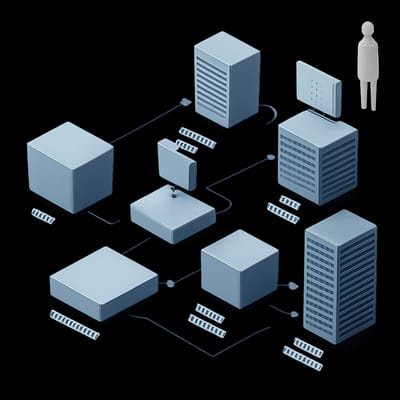
Accuracy comes from more than a good model. A scalable chat bot using NLP pipelines depends on several components working together consistently.
The components that matter most
- Training data quality: Real conversations beat invented examples every time.
- Intent coverage: Include high-frequency requests first, then edge cases.
- Entity resolution: Extracting a date is useful only if your system can validate it.
- Context handling: Multi-turn conversations need short-term memory.
- Confidence thresholds: Low-confidence predictions should trigger clarification.
- Knowledge access: Retrieval from approved content improves consistency.
- Observability: Logs, dashboards, and transcript review reveal where the bot breaks.
A common mistake is trying to support too many intents too early. That creates overlap, lowers classifier confidence, and makes debugging painful. Product managers usually benefit from a phased release: start with the top five intents, measure deflection and satisfaction, then expand. Developers should also version datasets and prompts so they can trace performance changes over time.
Scalability depends on operational choices too. You may need queue management, rate limiting, and secure data handling before traffic grows. This becomes especially important when the bot supports customer support or internal automation. Topics like use cases in customer support, data processing, and performance metrics deserve deeper attention because they influence what success looks like long before launch.
The best systems stay narrow, observable, and easy to improve. That is what makes them valuable in production rather than impressive in demos.
How do you test, govern, and deploy the bot safely?
Testing an NLP bot means checking both language performance and operational reliability. You need to know whether the model understood the request, whether the workflow executed correctly, and whether the answer met the user's need.
What to test before launch
- Intent accuracy across common and ambiguous queries
- Entity extraction precision for dates, names, amounts, and locations
- Fallback frequency and escalation quality
- Task completion rate for core journeys
- Latency under realistic traffic
- Security and privacy controls for stored conversation data
- Bias and compliance review for sensitive workflows
Governance matters because chat bots often touch customer data, internal systems, and decision support. IT professionals should define access policies, retention windows, and audit logs early. In UK-facing deployments, teams also need to think about privacy expectations, sector regulations, and approval workflows before exposing the bot to live users.
Deployment is usually smoother when you release in stages:
- Internal testing with known scenarios
- Limited beta with monitored users
- Production launch for a narrow use case
- Ongoing transcript review and retraining
This is also the point where a newsletter signup, whitepaper download, or case study review feels natural for business buyers comparing implementation paths. If your team is deciding between in-house build and external support, a product demo can help validate integration fit, governance controls, and expected rollout effort without committing too early.
How do you measure ROI from an NLP-driven chat bot?
ROI is not just about reducing support tickets. A useful chat bot testing workflow should connect technical performance to business outcomes. That means defining success before you build.
Metrics worth tracking
| Metric | Why it matters |
|---|---|
| Containment rate | Shows how often the bot resolves requests without human help |
| Task completion rate | Measures whether users actually finish the intended journey |
| Average handling time | Indicates efficiency gains in support or sales workflows |
| Escalation quality | Reveals whether handoffs preserve context and reduce friction |
| Customer satisfaction | Captures perceived usefulness, not just technical accuracy |
| Cost per conversation | Helps compare automation against manual service costs |
| Lead quality | Useful when the bot supports acquisition or qualification |
For business buyers, ROI often starts with reduced service volume and faster lead response. For SMB marketing teams, value may come from qualifying inbound traffic outside office hours. Product managers often look at activation, onboarding completion, or feature discovery. IT professionals tend to focus on maintenance burden, security overhead, and integration stability.
Keep expectations realistic. Early ROI usually comes from one narrow workflow done well, not a universal assistant. Once the bot proves value, that is the right time to review case studies, request a demo, or compare deployment options more seriously. The strongest implementations improve service quality and process efficiency at the same time, which makes future expansion much easier to justify.
FAQ about building a chat bot with NLP pipelines
What is the difference between an NLP chat bot and a rule-based chat bot?
An NLP chat bot interprets natural language using intent detection, entity extraction, and context handling. A rule-based bot follows predefined paths and works best when user inputs are predictable. Many production systems combine both approaches for better reliability.
How much training data do you need to build a chat bot using NLP pipelines?
You do not always need massive datasets, but you do need representative examples for each intent. Start with high-frequency queries, common phrasing variations, and edge cases. Quality and coverage matter more than raw volume in early versions.
What should SMB marketing teams automate first with an NLP chat bot?
Lead qualification, campaign FAQs, booking requests, and simple product discovery are strong starting points. These flows are repetitive, measurable, and usually low risk. They also make it easier to connect the bot to revenue and response-time improvements.
How can product managers decide whether a chat bot is ready to launch?
They should look at task completion, fallback rates, transcript quality, and user feedback from a controlled pilot. A bot is rarely ready when accuracy is the only metric being reviewed. Readiness also depends on escalation design, analytics, and support team alignment.
What do IT professionals need to check before deployment?
They should verify API reliability, authentication, logging, data retention, and access controls. Security reviews should happen before launch, not after incidents appear. Monitoring and rollback plans are also essential for stable deployment.
Can a small team build a useful chatbot system without a large budget?
Yes, if the scope is narrow and the workflow is clear. A focused bot that solves a few recurring problems can deliver value quickly without enterprise-scale investment. The biggest cost savings usually come from disciplined scope and good integration planning.
Which metrics matter most after launch?
Track containment rate, task completion, customer satisfaction, cost per conversation, and escalation quality. These metrics show whether the bot is helping users and the business at the same time. Over time, you can add more advanced performance metrics as the system matures.